
The complete guide to going from idea to launch — without wasting months or money
How to Start an Online Marketplace — Step by Step (2026)
Starting an online marketplace is one of the best business opportunities in 2026. But most founders never get past the idea stage. This step-by-step guide walks you through everything — from validating your niche to getting your first transaction.
Starting an online marketplace is one of the best business opportunities you can pursue in 2026. The marketplace model is proven — eBay, Etsy, Airbnb, Fiverr, and Uber all connect buyers with sellers and take a cut of every transaction. But most people who try to start a marketplace never get past the idea stage.
Not because the idea is bad. But because they get stuck on technical decisions, spend too long building, or try to be everything at once. This guide walks you through the exact steps to go from idea to live marketplace — based on real experience building and launching marketplaces.
In this 14-minute video I walk through the complete 5-step playbook — validate your idea, solve the chicken-and-egg problem, choose how to build, set up Stripe Connect, and get your first 10 transactions. It's the same framework I've used to launch four marketplaces of my own.
Read the full video transcript▼
Introduction (0:00)
The marketplace space has completely changed. Today you can have a live marketplace - with payments, seller onboarding, and a custom domain - in about an afternoon. My name is Rasmus, and I recently built four online marketplaces. Some worked, some failed. In this video, I'll take you through how I would build an online marketplace today, step by step, so you don't make the same mistakes I did. Let's do it.
Step 1: Validate your marketplace idea (0:26)
This is super important because most marketplaces that end up failing, it's not because the tech was bad. It's because they couldn't get sellers and buyers to connect on their marketplace. Here's the fastest way to validate your idea.
Start by picking a niche - a marketplace for everyone is a marketplace for no one. Think narrow: vintage furniture in your city. Local dog walkers. Handmade ceramics from the Nordics. Or, like I did, a Moomin mugs marketplace in the Nordics.
Second, find 10 potential sellers. DM them, email them, maybe meet a few in person. Ask them: if I make this marketplace, would you list on it? If you can't get 10 people to say yes, that might be a sign it's not going to work.
Third, find 10 potential buyers. Post in relevant Facebook or Reddit groups. Describe what you're thinking of doing and see what reaction you get. If there's no reaction at all, that's a bad sign. It's actually better to get some reactions - even mixed ones - because that means people out there care about your idea. If both sides show interest, there might be something there. If you get no reactions or only negative ones, consider pivoting. There are plenty of marketplace ideas out there - pivoting isn't that hard.
How I validated one of my marketplace ideas (2:06)
Let me show you how I validated one of my ideas from a couple of years ago - a marketplace called NinjaBuzz, for buying and selling podcast ads. Small and medium-sized podcasters could list their podcast, and advertisers could reach out to advertise on their shows.
I wrote a post on the r/podcasting subreddit - not a huge subreddit, but very active. I wrote about myself, what we were doing, what we were building. I got a lot of upvotes and comments, and most people were quite positive. This marketplace could help small podcasters earn more money, which is hard otherwise. A month later I made an update post: here's what has happened, around 95 podcasters had signed up. That kept the feedback coming.
I really recommend doing something like this. It might not be Reddit - figure out where your potential sellers hang out. Reddit, Facebook, Instagram, in-person meetups. Put yourself out there, talk about what you're considering building, and get feedback from sellers quickly.
Step 2: Solve the chicken-and-egg problem (4:11)
Here's the brutal truth about marketplaces: buyers won't come without sellers, and sellers won't come without buyers. That's the chicken-and-egg problem, and you have to solve it.
How do you solve it? You cheat - you pick one side to focus on first. And almost always, that's the supply side, the sellers. Here's why: if you have great listings, you can always drive buyers there with ads, SEO, or social media. But if buyers show up and there are no listings, they're going to turn away immediately.
So start by getting your first 5 to 10 sellers before thinking about buyers. Help them set up their listings so they look amazing. Do the work for them if you have to. I have a whole video on the chicken-and-egg problem. The short version: stack the supply side first, then turn on demand.
Step 3: Choose how to build it (3 options compared) (5:24)
You have three real options.
Custom development: build it yourself or hire developers. Full control, full flexibility - but months of development, tens of thousands of dollars if you're hiring, plus ongoing maintenance. For an unvalidated idea, that's a huge gamble.
Open-source boilerplates: take a pre-built codebase like a Next.js marketplace boilerplate and customize it. Faster and cheaper than building from scratch, but you still need technical knowledge - hosting, payments, updates, security, all of it. Good option if you're already a developer.
No-code marketplace builder: this is where the game has changed the most. With a platform like Prometora, you can build, launch, and scale a marketplace without writing a single line of code. Payments, seller onboarding, custom domain - you can be live in one day.
Quick comparison: custom takes 3-6 months, $20k+, high technical skills, best for funded startups. Boilerplate is 2-6 weeks, $500-$5k, medium technical skills, best for technical founders. No-code like Prometora: live in one day, $99/month, zero technical skills, best for first-time founders and anyone who wants to focus on getting sellers and buyers transacting.
My honest take: if it's your first marketplace, go with a no-code marketplace builder like Prometora. Launch fast and focus on the hard part - getting sellers, then buyers, then getting them to transact. Most marketplace ideas fail because they never manage to launch, not because they picked the wrong tech stack.
Step 4: Setting up Stripe Connect (8:22)
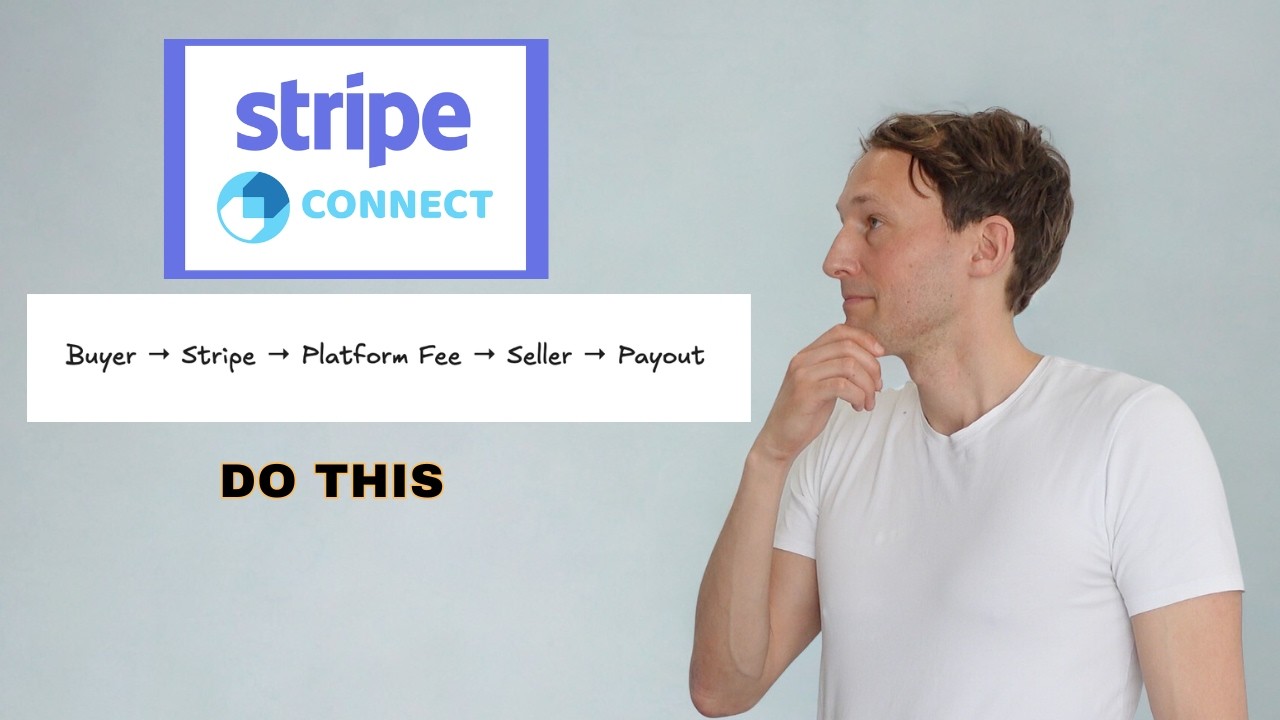
Payments trip up most marketplace founders. Splitting money between buyers, sellers, and the marketplace sounds complicated - but there's really only one answer: use Stripe Connect.
Here's how it works. A buyer pays on your marketplace. Stripe holds the money, your marketplace takes a commission (say 10% or whatever rate you set), and the rest goes to the seller. Stripe handles all the complicated stuff - tax, payouts, everything.
Setting up Stripe Connect from scratch can be painful - different account types, onboarding flows, webhook events. I have a whole video on this topic. But if you're using a marketplace builder like Prometora, everything is already set up. You just add your commission rate and you're good to go. Sellers go through the onboarding flow, get verified, and start receiving payouts automatically.
One thing to add: no matter what platform you choose, make sure it supports sellers listing products before they complete the onboarding flow. It's called deferred onboarding. In the real world, sellers want to see how the marketplace works before going through the whole Stripe onboarding. Let them list, let them make a couple of sales, and hold the money until they onboard. They get a much better experience and figure out how your marketplace works before committing. I have a GitHub repo on how to set this up - link in the description.
On Prometora, setup is super easy. Go to the payments area, click Stripe Connect, and add your publishable key and secret key. Start with your test keys from Stripe's test environment. In Stripe, switch to test mode, go to Developers then Overview, and you'll see your publishable and secret keys. Paste them into Prometora, save, and set your commission rate. Done. Prometora also has a revenue calculator - you can calculate your marketplace earnings and find your break-even point.
Step 5: Launch and get your first 10 transactions (11:30)
Your marketplace is live, you have real sellers with real listings. How do you get the first 10 transactions?
First, tell all your sellers to share their listings. Every seller has some kind of following. If they share their listings on social media, you'll get your first buyers - and your first transactions.
Second, post in communities where your buyers hang out. If they're likely in a particular Reddit community, post there. Or Facebook. Or Instagram. Find where your buyers are and show up there - similar to what I did with NinjaBuzz.
Third, treat every customer - buyer and seller - like a VIP. When they message you, reply as fast as you can. Reply in minutes if possible. Make them feel well taken care of. When your first transaction comes in, make sure everything goes smoothly so both buyer and seller walk away thinking this was a great experience and want to tell their friends.
Your first 10 transactions will teach you more about your marketplace than any planning ever could.
Recap and what's next (13:06)
Quick recap. Step 1: validate your idea - talk to real users. Step 2: solve the chicken-and-egg problem (focus on supply first). Step 3: usually go no-code to launch fast. Step 4: set up Stripe Connect for payments. Step 5: do things that don't scale to get your first 10 transactions.
This is the playbook I used when I launched Nordic Mugs, my marketplace for buying and selling Moomin mugs. I really think this is the best way to do it. If you'd like to test Prometora, you can try it free for 14 days at prometora.com.
The video above is the condensed 5-step playbook. The rest of this guide goes deeper on each step — plus what the video skips: picking your marketplace model (product vs service vs rental), a dedicated section on launching fast, and what to focus on after your first 10 transactions.
Finding a Niche That Actually Works
The biggest mistake first-time marketplace founders make is going too broad. "A marketplace for everything" is a recipe for failure. The marketplaces that succeed start narrow and expand later.
Look for niches where:
- People are already transacting — Check Facebook groups, Craigslist, forums, and spreadsheets. If people are buying and selling manually, there's demand for a better platform.
- The existing solutions are terrible — Fragmented, manual, or too expensive. Your marketplace should make the transaction easier, not just digital.
- There's enough volume — A niche needs enough buyers AND sellers to sustain activity. Too narrow and you'll never reach critical mass.
- Trust matters — Marketplaces add the most value when buyers need confidence in who they're buying from. Reviews, verification, and platform guarantees drive loyalty.
Validating Before You Build
Most marketplace founders skip validation entirely. They spend months building, launch to silence, and wonder what went wrong. Validation doesn't need to be complicated:
- Talk to 10 potential sellers — Would they list on your platform? What would convince them? What do they hate about current solutions?
- Talk to 10 potential buyers — Are they actively looking for this? Where do they currently go? What's missing?
- Check search demand — Use Google Trends, keyword tools, or even YouTube search suggestions to see if people are searching for what you want to offer.
- Look for manual workarounds — If people are using Google Sheets, WhatsApp groups, or Facebook Marketplace to do what you're planning, that's strong validation.
Validation should take days, not weeks. The goal is to confirm that real people want what you're building before you invest time and money.
Product vs Service vs Rental: Pick Your Model
Not all marketplaces work the same way. Before building, decide which model fits your niche:
- Product marketplace — Sellers list physical or digital products. Think Etsy, eBay, or Amazon Marketplace. Revenue comes from commissions on each sale.
- Service marketplace — Sellers offer services (freelance work, tutoring, home repairs). Think Fiverr, Thumbtack, or Rover. Commission on each booking.
- Rental/booking marketplace — Sellers list assets for temporary use. Think Airbnb, Turo, or Fat Llama. Commission on each rental period.
- Hybrid marketplace — A combination of models. Some marketplaces sell products AND services, or physical AND digital goods.
Your model determines your revenue structure, the features you need, and how you'll attract each side of the marketplace.
Solving the Chicken-and-Egg Problem
Every marketplace faces the same cold start challenge: buyers won't come without sellers, and sellers won't come without buyers. This is the number one reason marketplaces fail early.
The proven approach is to focus on supply first. Recruit sellers manually — one by one. Make it incredibly easy for them to list. Seed the platform with quality content so it doesn't look empty when buyers arrive.
- Start with sellers — Reach out personally. Offer free listings, reduced commissions, or help them set up. Make the first 10-20 sellers feel like partners, not users.
- Curate quality — A marketplace with 20 great listings beats one with 200 mediocre ones. Quality attracts buyers and sets the standard for future sellers.
- Create initial demand manually — Share listings on social media, forums, and communities. Be the marketing department for your first sellers.
- Use single-player mode — Give sellers value even without buyers (e.g., a professional storefront, inventory tools, or SEO exposure).
For a deeper dive on this topic, read our guide on the chicken-and-egg problem in marketplaces.
Setting Up Payments with Stripe Connect
Payments are the hardest technical challenge in building a marketplace. Unlike a regular online store, you need to split money between multiple parties — your platform takes a commission, the seller gets the rest, and the payment processor takes their cut.
Most marketplaces use Stripe Connect for this. It handles seller verification (KYC), payment splitting, payouts, and tax reporting. But setting it up from scratch is notoriously complex.
This is where marketplace software saves you months. Platforms like Prometora handle Stripe Connect integration out of the box — sellers can start selling immediately, and payouts happen automatically.
Learn more in our detailed guide: Stripe for Marketplaces — Everything You Need to Know.
Building and Launching Fast
The single biggest predictor of marketplace success is speed to first transaction. Not how many features you have. Not how polished the design is. How fast you can get a real buyer to pay a real seller through your platform.
- Don't build custom — Custom development costs $50k-200k+ and takes 6-12 months. Use marketplace software to launch in days or weeks.
- Launch with minimal features — Listings, user accounts, search, and payments. That's it. Everything else can come later.
- Don't wait for perfect — Your first version will be embarrassing. That's fine. The goal is to learn, not to impress.
- Focus on the core transaction — Can someone find what they want, buy it, and have the seller deliver? If yes, you have a marketplace.
Not sure which platform to use? See our full marketplace software comparison covering Prometora, Sharetribe, Arcadier, CS-Cart, and Marketplacer — or jump straight to the Prometora vs Sharetribe comparison.
In the 5-step playbook video above, I walk through the exact framework I used to launch Nordic Mugs, my Moomin mugs marketplace — from validating with real sellers to getting the first 10 transactions. That's the speed and structure you should be aiming for on your first version.
Getting Your First 10 Transactions
Your marketplace isn't proven until real money has changed hands. The first 10 transactions are the hardest — and the most important. They prove the model works, give you data, and build momentum.
- Be the concierge — For your first transactions, be personally involved. Help buyers find what they need. Help sellers fulfill orders. Learn every pain point.
- Ask for feedback obsessively — After every transaction, ask both sides what worked and what didn't. This feedback is worth more than any survey.
- Fix friction immediately — If something confuses users or causes drop-off, fix it the same day. Speed of iteration is your competitive advantage.
- Celebrate publicly — Share milestones. "Our 10th transaction!" builds credibility and attracts more users.
Growing and Retaining After Launch
Once you have product-market fit (repeat transactions from happy users), shift focus to growth and retention:
- SEO — Marketplace listings create natural SEO content. Every product page is a potential Google result. Optimize category pages and listing descriptions.
- Content marketing — Write guides for your niche. If you're a pet services marketplace, write about pet care. Attract your target audience with useful content.
- Referrals — Happy sellers bring other sellers. Happy buyers tell friends. Consider referral incentives to accelerate word-of-mouth.
- Reduce churn — At small scale, every lost user matters. Understand why people leave and fix those issues before pouring money into acquisition.
For detailed marketing strategies, read our guide on how to market your online marketplace.
Calculate Your Marketplace Revenue
Before you invest time and money, understand the math. What commission rate will you charge? How many transactions do you need to break even? What does your marketplace earn at scale? Use the calculator below to model your revenue.
Your Settings
Break-Even Analysis
Orders to Break Even
36
GMV at Break Even
$1,800
You're 64 orders above break-even! Your subscription is covered.
Net profit per order: $4 (your 10% commission minus 1.5% Prometora fee)
Per Transaction Breakdown
Deducted from seller
What you earn as marketplace owner
Seller side (for reference)
Monthly Projections
Yearly Projections
Revenue Growth Chart
Visualize how your net revenue scales with order volume
Monthly orders → Net revenue/month
Scaling Projections
See how your revenue grows as your marketplace scales (based on $50 AOV, 10% commission, Professional plan)
| Orders | GMV | Commission | Fees | Net |
|---|---|---|---|---|
| 50 | $2,500 | $250 | -$187 | $64 |
| 100Current | $5,000 | $500 | -$224 | $276 |
| 250 | $12,500 | $1,250 | -$337 | $914 |
| 500 | $25,000 | $2,500 | -$524 | $1,976 |
| 1,000 | $50,000 | $5,000 | -$899 | $4,101 |
Ready to Start Earning?
With 100 orders at $50 AOV, you could be earning $276/month. Start building your marketplace today.
Marketplace Ideas to Inspire You
Every successful marketplace started as a simple idea solving a real problem
Local Services
Connect local service providers (cleaners, tutors, handymen) with people in their area. High repeat rate and strong local SEO potential.
Target: Homeowners, parents, professionals
Niche Crafts & Products
Curate a marketplace for a specific product category — vintage clothing, handmade jewelry, custom furniture. Curation creates trust.
Target: Collectors, enthusiasts, gift shoppers
Digital Goods & Templates
Sell digital products like design templates, course materials, or software tools. Zero shipping costs and infinite inventory.
Target: Creators, professionals, small businesses
Stripe Connect
Secure payments
SSL Encrypted
All data protected
30-Day Guarantee
Money back, no questions
Custom Domain
Your brand, your URL
Trusted by Marketplace Founders
“I had been thinking about building a marketplace for some time and already tried several ‘no coding’ platforms. These however were too restrictive in customization for my needs. After looking for alternatives I stumbled upon Prometora and can honestly say I never looked further since. Customization is great and a lot of features are already present for different types of marketplaces. Above all that the customer support is superb which really makes this one of the best ‘no coding’ platforms. I would highly recommend Prometora for anyone trying to build a solid marketplace with very basic technical skills.”
Lukas V.
Founder, United Spares — Automotive parts marketplace
“We had been looking for a platform for our jewelry marketplace for a long time, but most solutions were either too technical or lacked important features. With Prometora we quickly built a professional marketplace with Stripe payments, seller onboarding, and our own domain - without writing a single line of code. The support has been fantastic and always quick to help. Highly recommend Prometora to anyone wanting to start a marketplace.”
Julius J.
Founder, Valé — Jewelry marketplace
“I wanted a reliable partner, and choosing Prometora was undoubtedly the best decision for developing Perigoodies. The team’s guidance and dedication made my job much easier, and their responsiveness and support far exceeded my expectations and are greatly appreciated.”
Nelly P.
Founder, Perigoodies — Périgord artisan & gourmet marketplace
Frequently Asked Questions
Modern marketplace software like Prometora lets you launch for under $100/month because the core infrastructure — payments, listings, user management, admin tools — is already built. The real question is how quickly you can validate your idea with real users.
• Listing fees (charge sellers to post)
• Subscription plans (monthly fee for seller accounts)
• Featured listings (pay for premium placement)
• Freemium (basic is free, charge for advanced features)
Most successful marketplaces start with simple commissions and add other revenue streams later.
The real timeline isn't about building — it's about reaching product-market fit. That takes iteration, user feedback, and persistence. The faster you launch, the faster you learn.
Focus on one side first (usually sellers), curate quality, and create demand manually before scaling.
You should understand your niche, your users, and basic business fundamentals — but you don't need to know how to code.
Read our complete guide to Stripe for marketplaces →
Everything else — reviews, advanced filters, analytics, mobile apps, messaging — can come later. Over-building before launch is one of the most common reasons marketplaces fail.
Marketplaces are harder to start (two-sided supply/demand) but have higher potential — you earn from every transaction without holding inventory.

Related Guides
Keep going - these cover the next questions most marketplace founders have.

Marketplace Fundamentals
What Is an Online Marketplace?
A beginner's guide to understanding marketplace fundamentals

Marketplace Fundamentals
Ecommerce Marketplace: How to Create an Online Marketplace Like eBay
Why most ecommerce marketplaces fail before they launch — and how to avoid it
Marketplace Payments
Stripe for Marketplaces: Everything You Need to Know in 2026
The complete guide to Stripe Connect for marketplace founders
Ready to build your marketplace?
Turn your marketplace idea into reality. No coding required.
Start Free Trial